THE SHORT ANSWER
Choose a reed diffuser for steady background fragrance without a flame. Choose a scented candle if you want candlelight and a fragrance ritual while you are in the room. In a small space, placement and how much scent you want matter more than picking a universal winner.
Reed diffuser vs. candle, at a glance
A reed diffuser releases fragrance as its reeds absorb scented liquid. A candle releases fragrance as its wax warms during burning. Neither format is automatically stronger: the formula, room, airflow and placement all affect what you notice.
| What matters to you | Reed diffuser | Scented candle |
|---|---|---|
| When you want fragrance | Background scent throughout the day | A defined period while you are nearby |
| Flame | No flame required | Requires a flame and supervision |
| Atmosphere | A decorative bottle and reeds | The added glow of candlelight |
| Everyday care | Protect the surface; follow instructions for turning reeds | Trim the wick and follow the label’s burn limits |
| Small-space consideration | Start with fewer reeds if the maker recommends it | Choose a safe spot with clearance from anything that can burn |
| How longevity is described | Usually an approximate number of months | Usually an approximate number of burning hours |
Which is better for a small room?
A hallway or entryway: consider a diffuser
If you want to notice a familiar fragrance when you walk in, a diffuser is a practical place to start. Choose a stable spot where the bottle cannot be knocked over. Give the reeds space rather than tucking them behind a stack of books.
Keep expectations local. APOTHEKE describes a reed diffuser as scenting the area around it, rather than every corner of a home. A compact entryway and a large open-plan living room are different jobs.
A living room: choose around your routine
For an evening spent reading or catching up with a friend, a candle adds a visible focal point. If you are often moving between rooms, a reed diffuser may fit your routine better because it does not involve tending a flame. Do not leave a burning candle behind when you leave the room.
A bedroom or home office: start gently
A smaller room does not need several competing fragrances. Start with one product and see how it feels in the space before adding another. APOTHEKE recommends fewer reeds for smaller rooms; follow the instructions for your particular diffuser. If you prefer an unscented workspace or sleeping area, leaving fragrance out is a perfectly good choice.
For bedrooms, a candle belongs in awake, supervised time. Extinguish it before going to sleep. Keep both candle flames and diffuser liquids out of reach of children and pets.
One fragrance, two different routines
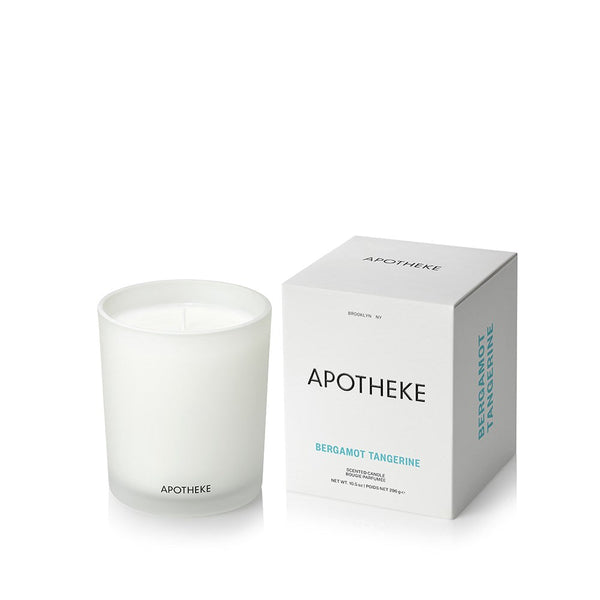
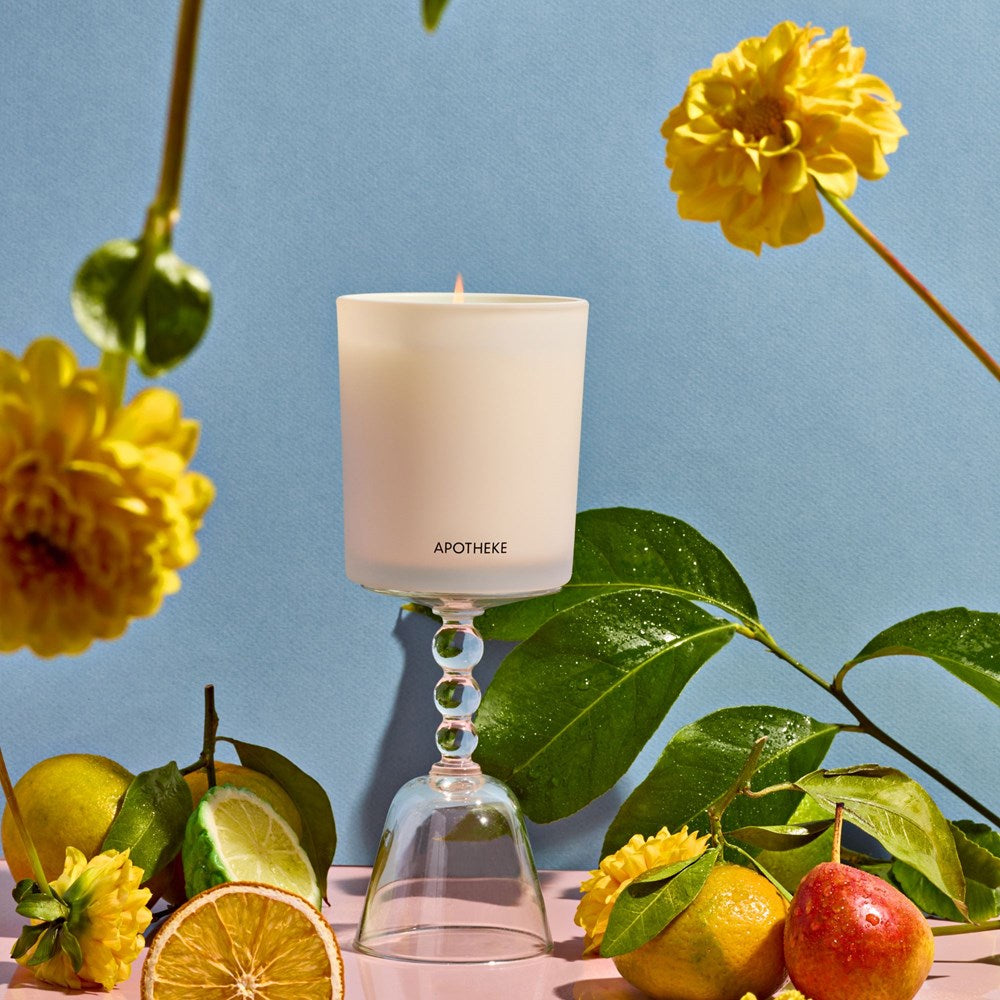
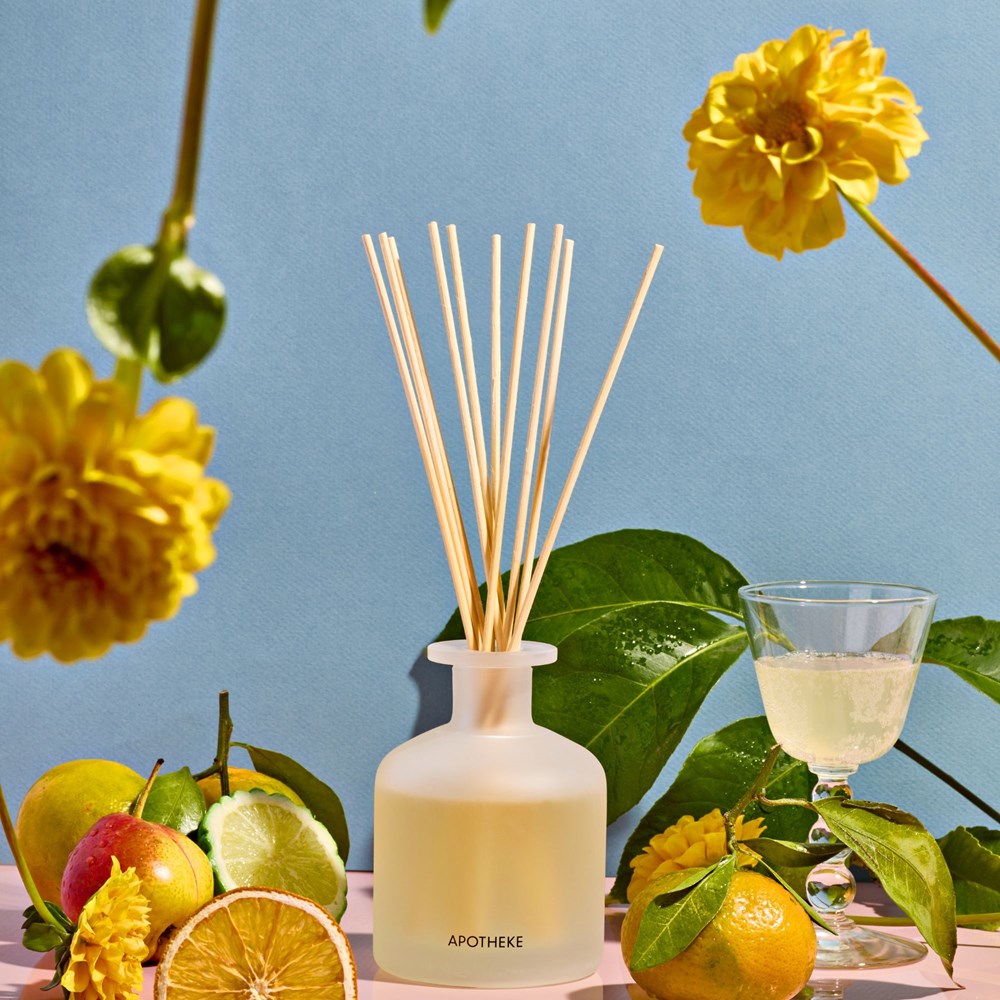
Comparing the same fragrance in two formats makes the decision more concrete. WonderWall carries APOTHEKE’s Bergamot Tangerine as both a Classic Candle and a Reed Diffuser. Both feature Italian bergamot and Sicilian tangerine, with warmer vanilla and amber notes.
- Classic Candle: a 10.5 oz soy wax blend in a matte glass vessel. The maker lists an approximate 60–70-hour burn time. Choose it for candlelit moments you can supervise.
- Reed Diffuser: 6.7 fl. oz. of an alcohol-free fragrance formula, with ten rattan reeds. The maker lists approximately 3–4 months of use, depending on individual use. Choose it for a continuing background scent.
These are manufacturer specifications, not results from a WonderWall side-by-side performance test. A diffuser’s calendar months and a candle’s burning hours measure different things; they should not be treated as equivalent amounts of fragrance.
Get the setup right
For a reed diffuser
Set the bottle on a coaster or protected, stable surface. Insert the reeds according to the maker’s instructions. APOTHEKE suggests turning its reeds weekly or as desired to refresh the fragrance. Handle the liquid carefully and clean up spills promptly. Avoid assuming a stronger scent means you need another bottle immediately; review the placement and care instructions first.
For a scented candle
Read the label before lighting. The National Candle Association recommends trimming the wick to ¼ inch, keeping the candle away from drafts and flammable objects, and never leaving it unattended. Follow the maker’s burn-time and remaining-wax limits. Let the candle cool before handling it.
Common questions
Does a reed diffuser last longer than a candle?
It may last more calendar days, but that is not a like-for-like comparison. A diffuser releases fragrance continuously; a candle is consumed during the hours you burn it. Check the individual product’s specifications and think about how often you would actually use it.
Which gives a stronger scent?
There is no reliable winner based on format alone. Fragrance formulation, the number of reeds, room size and airflow all matter. Start with a product suited to your space rather than assuming a bigger bottle or candle will be a better fit.
Can I use a candle and diffuser in the same room?
You can, but start with one to learn how it behaves in your space. Using a matching scent avoids deliberately mixing different fragrance profiles, though the combined effect can still be more than you want in a small room.
Is a reed diffuser maintenance-free?
No. It has no flame, but it still needs stable placement, surface protection and the care the manufacturer specifies. Keep the liquid away from children and pets, and do not put diffuser liquid in a device unless it is specifically made for that device.
Choose the routine, then the scent.
For an entryway you pass through all day, start by considering a reed diffuser. For an evening ritual with a warm glow, consider a candle. Once the format fits, explore WonderWall’s candles and home fragrances to find the scent you want to live with.
Sources & product details
This guide draws on manufacturer specifications and published care advice. Product availability and pricing can change; the product links show current details.